
US and international expression rules
Smiling in a Passport Photo: How Much Is Too Much?
Can you smile in a passport photo? Yes, for a US passport. The U.S. Department of State accepts a neutral expression or a natural, unexaggerated smile, with both eyes open and facing the camera. A big grin, laugh or squint can get the photo rejected, and the UK, Canada, Australia and Ireland want a neutral face with the mouth closed. PhotoForPass checks your photo against the rules before you get it.
Key takeaways
- A soft, natural smile is fine in a US passport photo. A wide grin, laugh or squint is not.
- A closed-mouth smile is the safest way to look friendly and still match your everyday face.
- Your eyes must stay fully open, so a smile that narrows your eyes can cause a rejection.
- Many other countries want no smile at all, so check the rules before you take a photo for a foreign passport or visa.
At a glance
- US passport
- Neutral face or natural, unexaggerated smile
- Eyes
- Both open, looking straight at the camera
- Teeth
- Not banned, but a closed-mouth smile is safest
- US visa (DS-160)
- A natural smile counts as a neutral expression
- UK, Canada, Australia, Ireland
- Neutral face, mouth closed, no smile
- Babies
- Newborn and infant eyes may be closed
Can you smile in a passport photo? Yes, a natural one
For a US passport book or card, you can smile, as long as it is natural and unexaggerated. The State Department asks for a neutral facial expression or a natural smile, with both eyes open, facing the camera directly.
The key word is natural. A relaxed smile that keeps your face close to how it looks at rest is fine. A smile that changes the shape of your face, shows a wide spread of teeth or makes your eyes narrow is the kind that gets photos rejected.
If you are unsure, aim for a soft, closed-mouth smile. It looks friendly, and it is the expression least likely to cause a problem. For every other photo rule, see passport photo requirements.
Natural smile vs exaggerated smile
The difference between an accepted and a rejected expression is usually how much your face changes. Use this table as a quick guide for a US passport photo.
When in doubt, compare the photo with your face in a mirror at rest. If the smile makes you look noticeably different, take another shot.
| Expression | OK for a US passport? | Why |
|---|---|---|
| Neutral, relaxed face | Yes | Always accepted |
| Soft, closed-mouth smile | Yes | Natural and unexaggerated |
| Slight smile showing a few teeth | Allowed if natural | Keep it relaxed so your face looks normal |
| Wide, toothy grin | No | Exaggerated, changes the eyes and cheeks |
| Laughing or open mouth | No | Not a natural, neutral expression |
| Smile that makes you squint | No | Both eyes must be fully open |
| Frown, raised eyebrows or pursed lips | No | Exaggerated expression |
Can you show teeth in a passport photo?
The US rules do not ban showing teeth. They ask for a natural, unexaggerated smile. In practice, a closed-mouth smile is the safest because it keeps your face closest to how it looks at rest, which is what officers compare at the airport and the border.
If you naturally smile with a few teeth showing and your eyes stay fully open, that can be fine. A wide grin that shows most of your teeth, pushes up your cheeks or narrows your eyes is the kind of smile that leads to rejection.
Why passport photos ask for a neutral face
Passport photos are used to confirm who you are, by officers and by face-matching systems at borders. A relaxed, neutral face is closest to how you look day to day and keeps your features in their normal position.
The ICAO-based photo guidelines used across the European Union ask for a neutral expression with the mouth closed, and many countries follow the same standard. The US is a little more relaxed and accepts a natural smile, but the goal is the same: a photo that clearly looks like you.
How to get a natural expression in your passport photo
Most people look stiff in passport photos because they hold one expression too long. These tips help.
- Take a slow breath out right before the shot to relax your face.
- Think of something mildly pleasant rather than forcing a smile.
- Keep your lips together and let the corners rise just a little.
- Relax your forehead and eyebrows. Raised eyebrows read as surprised.
- Blink right before the photo, then open your eyes normally.
- Take a burst of 10 or more photos and pick the most natural one.
A helper who chats with you while shooting gets a more relaxed look than a timer. Our passport photo at home guide covers the full setup.
Smiling with braces, missing teeth or dental work
Braces, retainers you wear every day, missing teeth and other dental work are part of how you look, and the passport photo rules do not ask you to hide them.
If you feel self-conscious, a soft closed-mouth smile or a neutral face hides them naturally and is the safest expression anyway. Do not remove a fixed appliance or change how you hold your mouth in a way that makes your face look different from normal. And remember that editing your teeth or smile after the photo is not allowed: the State Department does not accept photos altered with software, apps, filters or artificial intelligence.
Why your expression matters at the airport
Your passport photo is not just for the application. TSA officers at airport security and U.S. Customs and Border Protection officers at the border compare your face with it every time you travel, often alongside face-matching cameras.
A photo with a big grin or raised eyebrows can look quite different from your relaxed face in a security line. A neutral face or soft smile keeps your photo close to how you look on a normal day, for the 10 years an adult passport is valid. That is the real reason a calm expression is worth a few extra shots.
Eyes, eyebrows and mouth: the other expression rules
A smile is only one part of your expression. The rest of your face has to follow the rules too.
- Both eyes open, with no hair, glare or shadow over them.
- Look straight into the camera, not above or to the side.
- Eyebrows relaxed, not raised or furrowed.
- Mouth closed or naturally relaxed.
- Head level and facing forward, not tilted or turned.
- No glasses, since November 1, 2016. See glasses in passport photos.
Can babies and kids smile in passport photos?
Kids follow the same expression rules as adults, but babies get some leeway.
- Newborns and infants: their eyes may be partly or fully closed, which is often the easiest way to get a usable photo.
- Toddlers and older children: eyes open and a neutral face or natural smile. A calm, slightly amused look works; a big laugh does not.
- Other countries: Australia allows children under 3 to have their mouth open. Check each country's rules.
Tips for getting a calm moment are in our baby passport photo guide.
Smiling in US visa, green card and DV photos
Other US photos follow similar expression rules, with small differences in wording.
- US visa (DS-160 and DS-260): the Foreign Affairs Manual counts a natural smile as a neutral expression, as for passports. See US visa photo.
- DV lottery: neutral expression, both eyes open, full face toward the camera.
- Green card and USCIS forms: full face, frontal view. A neutral face is the safest choice. See green card photo.
- REAL ID and driver's licenses: set by your state DMV, which takes the photo at the visit.
Countries where you cannot smile in a passport photo
Many countries are stricter than the US and want a neutral face with the mouth closed. If you are applying for a foreign passport or visa, follow that country's rule, not the US one.
See our UK passport photo, Canada passport photo and Schengen visa photo pages for the full rules.
| Country | Smile allowed? | Rule |
|---|---|---|
| United States | Natural smile OK | Neutral face or natural, unexaggerated smile |
| United Kingdom | No | Plain expression, mouth closed |
| Canada | No | Neutral, mouth closed, not smiling or frowning |
| Australia | No | Neutral expression; smiling is an official unacceptable example |
| Ireland | No | Neutral, do not smile, mouth closed |
| Schengen visa | No | Neutral expression, mouth closed |
| India | No big smile | Natural expression, mouth closed |
| China | No big smile | Natural expression, lips closed |
| Pakistan | No | Neutral expression, mouth closed |
Passport photo expression checklist
Use this quick list when you pick the final shot. If every line is a yes, your expression meets the US rules.
- Neutral face or a soft, natural smile.
- Mouth closed or naturally relaxed, no laugh or open grin.
- Both eyes fully open, not narrowed by the smile.
- Eyebrows relaxed, not raised or pulled together.
- Looking straight into the lens, head level.
- No glasses, and no hair over the eyes.
- The photo looks like you on a normal day.
For the rest of the photo, run through the passport photo rejection reasons guide.
Check your photo before you submit
Not sure whether your smile is too much? Check it before you print or upload.
The free photo checker runs in your browser, so your photo stays on your device. When you order, PhotoForPass fixes the lighting, replaces the background with plain white, sizes and crops the photo to the official rules and checks it against the requirements, keeping your face exactly as it is. A digital photo is $16.95, or $18.95 with a 4 x 6 print sheet, and every order includes up to 5 photo checks, 3 free redos per person and a 14-day money-back guarantee.
Frequently asked questions
Can you smile in a passport photo?
Yes, you can smile in a US passport photo if the smile is natural and unexaggerated. The State Department accepts a neutral expression or a natural smile with both eyes open and facing the camera. A wide grin, laugh or squint can get the photo rejected. A soft, closed-mouth smile is the safest choice if you want to look friendly.
Can you show teeth in a passport photo?
The US passport photo rules do not ban showing teeth, but the smile must be natural and unexaggerated. A slight smile with a few teeth showing can be fine if your eyes stay fully open and your face looks normal. A wide, toothy grin is more likely to be rejected, so a closed-mouth smile is the safest option.
Will my passport photo be rejected for smiling?
A US passport photo will not be rejected for a natural smile, but it can be rejected for an exaggerated one. Big grins, laughing, open mouths and smiles that make you squint do not meet the rules. If you are unsure, take a few shots with a neutral face or a soft, closed-mouth smile and use the most natural one.
Why can't you smile in passport photos in some countries?
Many countries ask for a neutral face with the mouth closed because passport photos are used to confirm identity, by officers and face-matching systems. A neutral face keeps your features in their normal position and looks most like you day to day. The ICAO-based guidelines used across the EU ask for a neutral expression; the US accepts a natural smile.
Can you smile in a US visa photo?
Yes. For US visa photos for the DS-160 and DS-260, the Foreign Affairs Manual counts a natural smile as a neutral expression, the same as for passports. Both eyes must be open and you must face the camera directly. An exaggerated smile can still lead to rejection, and glasses are not allowed.
Can you smile in a green card photo?
USCIS instructions for green card and other form photos ask for a full face, frontal view, and do not describe smiling in detail. Because USCIS photos follow passport-style standards, a neutral face or a soft, natural smile with your mouth closed is the safest choice. The photos must be 2 x 2 inches on a white to off-white background.
Can babies smile in passport photos?
Babies and kids follow the same rule as adults: a neutral face or a natural smile. Newborns and infants may have their eyes partly or fully closed, which makes a calm, sleepy photo a good option. A big laugh or wide-open mouth is not ideal. Australia allows children under 3 to have their mouth open in its passport photos.
Do I have to keep my mouth closed in a passport photo?
For a US passport photo, your mouth should be closed or naturally relaxed, and a natural smile is allowed. An open mouth, laughing or showing your tongue is not. Many other countries, including the UK, Canada, Australia, Ireland and Schengen states, specifically ask for the mouth to be closed with a neutral expression.
Can I smile in a UK passport photo?
No. UK passport photos need a plain expression with your mouth closed, your eyes open and visible, and your face looking straight at the camera. The UK rules are stricter than the US rules, which allow a natural smile. If you are applying for a UK passport from the US, follow the UK rules and use a 35 x 45 mm photo.
Can I smile in a Canadian passport photo?
No. Canadian passport photos need a neutral expression: eyes open, mouth closed, not smiling or frowning. Canada also requires the photo to be taken by a commercial photographer and printed at 50 x 70 mm, with no editing of any kind. Online services and apps cannot supply a Canadian passport photo.
How do I look natural in a passport photo?
To look natural in a passport photo, breathe out slowly before the shot, relax your forehead and eyebrows, keep your lips together and let the corners rise slightly. Blink right before the photo and look straight into the lens. Take a burst of 10 or more shots with a helper and choose the most relaxed one.
Can I raise my eyebrows or tilt my head in a passport photo?
No. Raised eyebrows count as an exaggerated expression, and your head must be level and facing the camera directly in a US passport photo. Keep your forehead relaxed, your chin neither raised nor tucked, and your shoulders square to the camera. Babies are the main exception, since infants cannot always hold their head straight.
Official sources
We check these pages when the rules change. Last updated Nov 8, 2026.
- U.S. Department of State: Passport Photos (opens in a new tab)
- Foreign Affairs Manual 8 FAM 402.1, Passport Photographs (opens in a new tab)
- Foreign Affairs Manual 9 FAM 303.6, visa photos (opens in a new tab)
- DV-2026 instructions (U.S. Embassy copy) (opens in a new tab)
- USCIS Form I-485 instructions (photo requirements) (opens in a new tab)
- GOV.UK: Photo requirements for passports (opens in a new tab)
- IRCC: Canadian passport photos (opens in a new tab)
- Australian Passport Office: Passport photos (opens in a new tab)
- Ireland DFA: Passport photo guidelines (opens in a new tab)
- European Commission: ICAO photograph guidelines (opens in a new tab)
Related
- Photo requirements Every U.S. rule in one place
- Glasses rules When glasses are and are not allowed
- What to wear Clothes that photograph well
- Rejection reasons Why photos fail and how to fix them
- Baby passport photo Newborn and infant photos, done at home
- US visa photo DS-160 and DS-260 digital photo
- UK passport photo 35 x 45 mm photo for UK applications
- Take it at home Light, background and framing tips
Not sure yet? Ask your AI assistant
Ready when you are
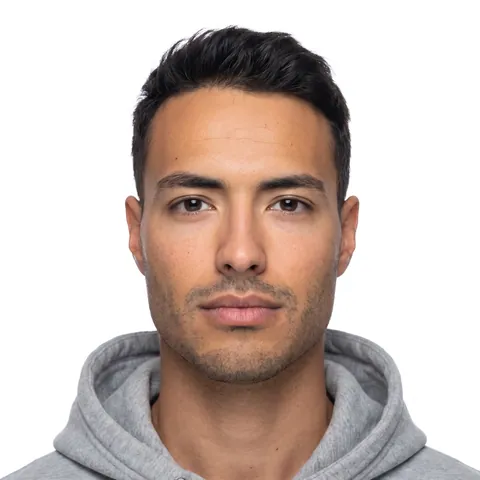
Get a passport photo with a natural look
Take a few shots with your phone and we prepare the best one to State Department rules. From $16.95, 14-day money-back guarantee.
- 14-day money-back guarantee
- Photo stays on your device until you pay
- Checked against official rules
Guides
Answers before you shoot
Plain-English guides with official sources, updated when the rules change.
-
Photo requirements
Every U.S. rule in one place
Read the guide -
Take it at home
Light, background and framing tips
Read the guide -
Print your photos
Print a 4x6 sheet at home or in store
Read the guide -
Photos near me
Store options compared
Read the guide -
What photos cost
Store and online prices, side by side
Read the guide -
Rejection reasons
Why photos fail and how to fix them
Read the guide